
China Top Cargo Bike Manufacturers for Global Buyers
Urban deliveries are changing quickly. The World Economic Forum’s 2020 report, The Future of the Last-Mile Ecosystem, projects that delivery demand across 100 cities will grow 78% by 2030. It also estimates a 32% rise in related emissions without effective changes. These projections help explain why more fleet operators are examining the Cargo Bike as a practical option for short urban routes.
For global buyers, choosing a manufacturer involves more than comparing prices. Frame materials, payload ratings, braking systems, battery specifications, and access to replacement parts all matter. A delivery rider needs predictable handling with a loaded box, even on wet streets or uneven paving. Buyers should also request clear test methods and after-sales service terms. Details matter.
This guide examines leading China-based cargo bike manufacturers through product range, production capability, customization, quality controls, and export support. It encourages buyers to verify claims with technical documents, factory assessments, and sample testing where practical. A polished product page is not proof. Some evidence may still be difficult to compare across suppliers, so the guide will note those limits rather than treat every specification as equivalent. That comparison is imperfect, but useful. The aim is to help importers, distributors, and fleet managers identify suppliers whose products match real routes, loads, and service needs—not just a low initial quotation.
China’s Cargo Bike Manufacturing Landscape
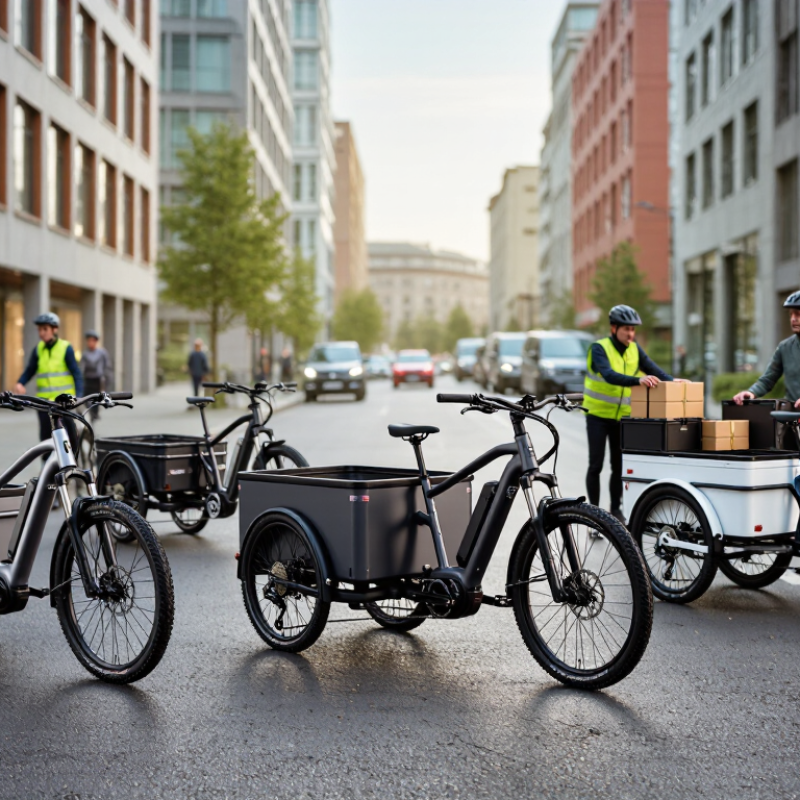
China’s cargo-bike manufacturing landscape builds on a large, established bicycle and electric-mobility supply base. The China Bicycle Association’s 2023 industry statistics reported about 48.8 million conventional bicycles and 42.3 million e-bikes produced. These figures are not cargo-bike totals. They do, however, indicate the scale of local frame, motor, battery, and component supply. For global buyers, that can mean more choices in frame geometry, payload configuration, and production volume. A rear box, longtail rack, or low step-through frame each changes handling and assembly needs. Details matter.
Factories may offer welding, paint finishing, and final assembly under one roof, while some source electrical parts from specialist suppliers. Buyers should verify load ratings, braking performance, battery specifications, and inspection records against their own requirements. The numbers above describe broad industry output, not cargo-bike quality or capacity. That distinction is easy to miss. A supplier’s sample can also differ from later production, so documented checks matter.
Tips: Request a loaded test ride, not just a showroom demonstration. Ask for drawings, component specifications, and a written quality-control plan before confirming an order. One limitation remains: public data rarely separates cargo-bike production from the wider bicycle sector, making factory-level verification especially useful.
China’s Cargo Bike Manufacturing Landscape: Motor-Power Benchmarks for Global Buyers
Regulatory motor-power benchmarks help manufacturers plan cargo-bike specifications for different markets. China’s 400 W figure is the limit under the GB 17761-2018 electric-bicycle standard; the EU’s 250 W figure applies to EPACs under Regulation (EU) No 168/2013; and the U.S. federal definition sets a 750 W ceiling for a low-speed electric bicycle. These rules are not directly equivalent, and local requirements may differ. The chart shows regulatory limits, not cargo-bike production, payload capacity, or market share.
Sources: GB 17761-2018; Regulation (EU) No 168/2013, Article 2(2)(h); 15 U.S.C. § 2085.
Cargo Bike Types and Their Global Applications
Cargo bikes serve different jobs, not one universal route. Longtail models carry groceries, tools, or two children on narrow streets. Front-loading bikes offer a low, visible cargo box for parcels and food deliveries. Three-wheel models provide a steadier platform for heavier loads, though tight corners can be difficult. Electric assistance helps on hills and longer routes. Small details matter. Door width, curb ramps, battery charging, and local weather can change which design works best.
The European Cyclists’ Federation’s 2018 review estimated that cargo bikes could handle up to 25% of urban freight deliveries. This is potential, not a guaranteed result; trip distance, load weight, and depot location all matter. In dense European centres, front-loaders can support parcel rounds with frequent stops. In Asian cities, compact longtails may better navigate narrow lanes and serve small retailers. In spread-out North American districts, electric cargo bikes can cover neighbourhood deliveries, but range and safe cycling infrastructure remain constraints. The fit is not always obvious. A practical buyer should test real loads and routes before choosing a fleet.
How to Evaluate Chinese Cargo Bike Manufacturers
China Top Cargo Bike Manufacturers for Global Buyers
How to Evaluate Chinese Cargo Bike Manufacturers
Evaluating a cargo bike manufacturer takes more than comparing catalog prices. Ask how the factory controls frame alignment, weld quality, and paint thickness. Request photos of production checkpoints, not only polished showroom images. A neat showroom proves little. If possible, inspect a sample bike with the intended load and route in mind. Check steering stability, braking response, and access to common wear parts.
Ask for written test procedures and recent inspection records. Confirm how the manufacturer checks maximum load, brake performance, battery capacity, and electrical connections. Match the test setup to your intended configuration; a result for one model may not apply to another. Small details matter. Look closely at cable routing, fasteners, and whether the kickstand holds a loaded bike on uneven ground. Independent testing can add confidence, though it may increase cost and lead time.
Discuss prototype changes, minimum order quantities, production schedules, and warranty handling before placing an order. Ask who pays for replacement parts and how faults are documented. Compare sample quality with the first production batch, since consistency is harder to judge from one bike. A factory may answer slowly or provide incomplete records; treat that as a signal to clarify, not automatic proof of poor quality. Clear specifications and agreed inspection points make comparisons more reliable.
Leading Manufacturers and Their Product Specialties
China’s cargo-bike manufacturers often build around distinct jobs rather than one universal design. Some specialize in longtail models, with an extended rear rack for child seats, panniers, or delivery boxes. Others focus on front-loading bikes, where a low cargo box sits between the rider and front wheel. Three-wheel models suit steady, low-speed transport, though they need more storage space. Compact frames can help in crowded streets. They may carry less.
Product specialties also show up in components and customization. A maker may offer reinforced frames, adjustable cargo platforms, hydraulic disc brakes, or battery systems sized for longer routes. Fleet-focused suppliers may provide interchangeable boxes and common replacement parts. Ask for measured payload limits, not just a large-looking cargo deck. Check how the bike handles when loaded; an empty test ride can be misleading. Catalog figures are useful, but daily use is messier.
Tips: Request drawings, component specifications, and sample inspection photos before ordering. Confirm service-part availability and test a loaded unit on your intended route. Small details matter. A box that fits the product page may not fit your doorway.
China Top Cargo Bike Manufacturers for Global Buyers - Leading Manufacturers and Their Product Specialties
| Manufacturer Product Specialty | Common Configuration | Typical Cargo Application | Useful Design Features | Buyer Checks |
|---|---|---|---|---|
| Longtail cargo bicycles | Two wheels, extended rear rack, and space for cargo or passenger accessories | Grocery delivery, family transport, and light commercial loads | Uses a bicycle-style frame; compatible models may support panniers, passenger pads, or child seats | Confirm rack load rating, accessory compatibility, frame size, and whether the quoted payload includes the rider |
| Front-loader box cargo bicycles | Two wheels with a cargo box positioned ahead of the rider; steering linkage varies by design | Urban parcel delivery, groceries, and passenger transport in approved configurations | Low-mounted cargo can help keep weight near the ground; box size and weather protection are configurable | Check overall length, turning behavior, box dimensions, braking system, and local road-use requirements |
| Three-wheel cargo tricycles | Two front wheels or two rear wheels, with a cargo platform or box | Commercial deliveries, market transport, and other applications requiring a stable parked vehicle | Three contact points allow the vehicle to stand without a kickstand; steering and cornering differ from two-wheel bicycles | Ask for rated payload, track width, turning radius, brake specification, and guidance for loaded cornering |
| Electric-assist cargo bicycles | Two- or three-wheel cargo platform with a battery and electric motor assistance | Routes with frequent stops, hills, or heavier loads than a rider would typically move unassisted | Battery capacity, motor location, display, and assist controls vary across configurations | Verify the applicable electrical and road regulations in the destination market, charger compatibility, and battery documentation |
| Commercial delivery cargo platforms | Reinforced frame with a rear rack, modular box, or flatbed cargo area | Courier services, food delivery, retail replenishment, and local logistics | May be designed for interchangeable containers, durable fittings, and frequent-use components | Request frame and component specifications, service-part availability, warranty terms, and any load-test documentation |
| Compact or folding cargo bicycles | Shorter or folding frame, with a rack or compact cargo-carrying arrangement | Mixed-mode commuting, smaller storage spaces, and lighter urban errands | Designed to reduce storage footprint; cargo capacity depends on frame design and approved accessories | Check folded dimensions, maximum permitted load, hinge or latch inspection instructions, and accessory limits |
This table compares common cargo-bike product specialties rather than ranking individual manufacturers. Configurations and load limits vary by model; buyers should confirm specifications and destination-market compliance directly with the supplier.
Export Standards, Customization, and Supplier Verification
For global buyers, a cargo bike is export-ready only when its documentation matches the destination market. Request current test reports, product specifications, labeling samples, and a clear list of applicable standards. Check that reports cover the exact frame, braking system, electrical parts, and battery configuration in the quotation. A similar model is not enough. Requirements vary by country, so confirm them with a qualified compliance professional before shipment. Keep records of approved changes.
Customization should be discussed before production, not after a sample arrives. Share intended load weight, rider height range, daily route conditions, and preferred cargo-box dimensions. Ask how changes affect stability, braking, range, and service access. A wider box may seem practical, but it can change handling. Details matter. Approve a sample against written measurements, then confirm that the production version will use the same components and finish.
Supplier verification takes more than a polished factory tour. Request recent production records, quality-control steps, component traceability, and references from comparable export orders. If possible, arrange an independent factory audit and pre-shipment inspection. A showroom sample can look flawless yet reveal little about routine production variation. Even a careful checklist can miss things; buyers should document unresolved questions and assign someone to verify them before payment milestones.