What Is the Best Professional Kart to Buy in 2026?

Choosing the best Professional Kart to buy in 2026 depends less on a single “top” model than on where and how you plan to race. Track layout, class rules, driver size, and maintenance access all shape the right choice. A fast chassis may feel sharp through tight corners, yet become tiring on a bumpy circuit. Fit matters.

This guide compares the factors buyers should check before committing: chassis construction, adjustability, brake feel, parts availability, and total running costs. It also considers whether a kart suits sprint racing, endurance events, or frequent practice. Look beyond glossy photos. Ask a reputable dealer about current specifications, replacement parts, and setup support, then confirm details with your local track or series. A well-supported kart can be more useful than a higher-priced machine with hard-to-find components.

Specifications help, but they do not tell the whole story. Seat position, steering response, and pedal reach are easier to judge during a proper fit check or supervised test session. Small differences matter. The “best” option may still require compromises, especially when budget and future upgrades are involved. That is worth admitting: no comparison can predict every driver’s feel on every surface. By weighing verified information against your own needs, you can narrow the field and choose a Professional Kart that makes sense beyond its first race.
What Is the Best Professional Kart to Buy in 2026?

FIA Karting Classes: 125cc OK, OK-Junior, and Six-Speed KZ

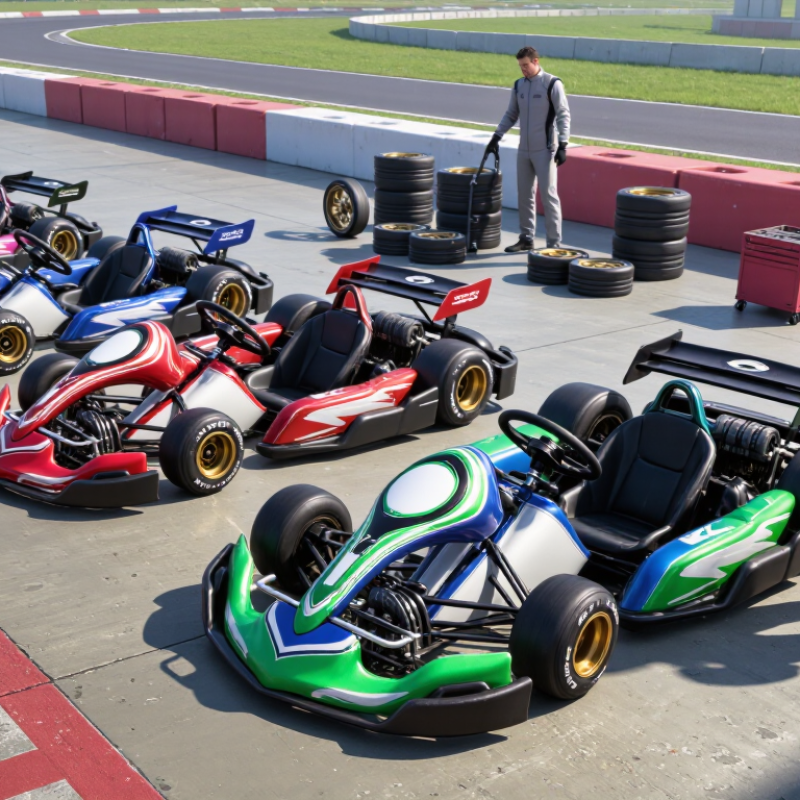
For a professional kart in 2026, the right choice depends on the FIA class you plan to race, not just peak speed. A 125cc OK-Junior package suits eligible younger drivers building racecraft and learning to manage a direct-drive engine. It has no gearbox, so clean corner exits and precise throttle control matter. Small mistakes show quickly.

The senior OK class also uses a 125cc direct-drive engine, but its performance and driver requirements differ from Junior. Check the current series regulations before buying; age limits, homologation periods, and permitted equipment can change. A six-speed KZ kart adds a clutch and gearbox, bringing more decisions into each lap. Braking, downshifts, and gear selection demand practice. Very rewarding, but not simple.

Before committing, inspect the frame for cracks and repairs, confirm engine history, and ask what spares local teams can supply. Compare the full running cost, including rebuilds, tires, transport, and track time. A fast kart with scarce parts may sit idle. I may be putting too much weight on maintenance, yet missed track days can stall progress. Seat fit matters too: check pedal reach and steering position with your race gear on. Choose the class that matches your experience, budget, and available competition.
Choose Between Direct-Drive OK and Six-Speed KZ for Your Race Format

For 2026, the best professional kart depends on the races you plan to enter. An OK kart has direct drive, with no gearbox to manage. Its pace comes from clean corner exits, precise braking, and carrying momentum. The lighter control workload can help drivers focus on racing lines and traffic. That feels simple. It isn’t effortless. A missed apex still costs speed, and a poorly matched setup can make the kart feel nervous.

A KZ kart adds a six-speed gearbox and frequent shifting. It can suit tracks with long straights, tight hairpins, and repeated acceleration zones, where choosing the right gear matters. The extra controls also demand practice, especially in busy starts. More components mean more setup and maintenance to consider. Not always worth it. Before buying, compare your event calendar, local class rules, track layout, and access to experienced support. If most races reward smooth momentum and quick reactions, OK may be the better fit. If gear selection is central to your circuits, KZ could make more sense. I’d still test both when possible; preference can change after a few laps.

Compare FIA Minimum Weights: 145 kg for OK and 140 kg for OK-Junior

For a professional kart in 2026, compare the class weight before comparing equipment. FIA Karting’s technical regulations set minimum combined weights of 145 kg for OK and 140 kg for OK-Junior. These figures include the kart and driver, not the bare chassis. That five-kilogram difference can affect ballast choices, seat position, and handling. Check the current regulations for your competition before buying; class rules can change.

FIA technical documents are the primary reference for these limits, while official event scrutineering records show how compliance is checked in practice. A lighter class minimum does not automatically make a kart faster. Driver mass, chassis setup, and track conditions still matter. On a tight circuit, even a small ballast adjustment can change how the kart turns. I have seen buyers focus too much on the headline number. It is an easy mistake.

Tips: Ask the seller for the kart’s race-ready weight and weigh it with the intended driver. Confirm where ballast can be mounted under the applicable rules. Keep a simple setup log. A bathroom scale is not enough; use a calibrated motorsport scale. And be honest about your needs: a technically ideal package may still feel wrong on track.

What Is the Best Professional Kart to Buy in 2026?

FIA minimum weight comparison: OK and OK-Junior

The stated FIA minimum combined weight is 145 kg for OK and 140 kg for OK-Junior. These figures are a class specification, not a measure of which kart is best; check the current regulations and your race series’ requirements before buying.

Evaluate Chassis Homologation, Engine Support, and Replacement-Part Access

A professional kart is a package, not just a fast chassis. In 2026, check that its homologation documents match your intended class and remain valid for the relevant period. Confirm the chassis specification, axle options, and permitted adjustments in writing. Rules vary, and a kart that looks suitable may not fit your series. Ask a qualified local technician to review the paperwork before you buy. Small details matter.

Engine support deserves equal attention. Ask who can service the engine, how often common rebuild parts are available, and what a typical turnaround looks like during race season. A modest engine with reliable technical support can be a better choice than a powerful one that sits waiting for parts. Check whether setup guidance and service records are included. I would not assume online availability means quick delivery.

Tips: Request a current parts list and prices. Check stock for brake pads, sprockets, bearings, and steering components. Ask about lead times for less common pieces, too. Inspect the kart in person if possible, and note any wear around mounting points. Keep some budget for replacements; I often underestimate that part.

Budget for the Complete Package: Kart, Spares, Tires, and Safety Gear

A professional kart’s purchase price is only the starting point. Set a complete-package budget before comparing chassis or engine options. Include freight, assembly, and setup work from a qualified mechanic. These costs are easy to overlook. Ask exactly what the price includes, and get the answer in writing. A low advertised price can leave little room for essentials.

Reserve money for practical spares: chains, sprockets, brake pads, bearings, and basic tools. A second set of tires may make sense if your schedule demands it. Choose parts around your track and race calendar, not a list copied from another driver. Tires also need proper storage; sunlight and heat can age them. I would rather carry fewer useful parts than buy duplicates I cannot identify. That plan may need adjusting.

Safety gear belongs in the budget, not in whatever cash remains. Allow for a properly fitted helmet, suit, gloves, shoes, and protective equipment required by your series or venue. Fit and condition matter more than appearance. Include replacement costs and transport, such as a secure kart stand and a dry gear bag. Keep a small reserve for repairs. The total may look less exciting, but it is more honest.

What Is the Best Professional Kart to Buy in 2026? — Budget for the Complete Package: Kart, Spares, Tires, and Safety Gear

Illustrative 2026 U.S. budget for a new, competition-ready 125cc shifter kart package. Prices are estimates in U.S. dollars and vary by class, specification, supplier, and region.

Item Estimated Budget (USD) Included / Budget Notes
Racing chassis and rolling hardware $5,500–$7,000 New competition chassis with frame, brakes, hubs, axle, seat, wheels, and standard rolling components.
125cc shifter engine package $4,000–$5,500 Competition engine and typical installation components; confirm class rules and included exhaust, radiator, and clutch parts before purchase.
Data logger and basic sensors $300–$700 Entry-level lap timing and data logging, with basic temperature or engine-monitoring sensors where supported.
Initial spare-parts kit $1,000–$1,800 Practical starting supply of common wear and repair items, such as chain, sprockets, brake pads, bearings, fasteners, and cables.
Three sets of racing tires $750–$1,050 Budgeted at approximately $250–$350 per four-tire set; tire choice and replacement rate depend on the series and track conditions.
Certified full-face helmet $500–$1,000 Allow for a properly fitted helmet carrying a current certification accepted by the intended sanctioning body.
Racing suit $250–$500 Competition suit meeting the applicable series or event requirements.
Gloves and racing shoes $160–$320 Budget for kart-specific gloves and shoes with a secure fit and suitable control feel.
Rib protector and neck protection $200–$450 Properly fitted protective equipment; confirm any event-specific requirements and sizing before buying.
Essential tools and setup equipment $400–$800 Basic hand tools, tire-pressure gauge, chain tools, and setup items needed for routine trackside adjustments.
Initial fuel, oil, and small consumables $100–$200 Starter allowance for fuel, lubricants, and minor consumables; fuel and oil requirements depend on the engine and event rules.
Estimated complete-package total $13,160–$19,320 Estimated sum of the listed items. Sales tax, shipping, race entry fees, kart transport, ongoing maintenance, and major engine rebuilds are not included.

Before purchasing, verify that the kart, engine, tires, and safety equipment comply with the rules of the series you plan to race. Ask the seller for an itemized quote so included components and exclusions are clear.